
Display Box Types Every Brand Needs to Know About
Most consumers do not care about display box types until it becomes necessary for them to think about them. Perhaps you are introducing a product, attending a trade fair, or realising that the packaging does not match your branding anymore.
However, whatever the case may be, once you dive into the field of display packaging, you will be overwhelmed by the possibilities.
It is important to realise that a display box is not merely a packaging box but an experience that the customers have when engaging with your product for the first time.
Let's see which kinds of display boxes you can consider using and how and when to use them.
Display Box Types and When to Use Each One
1. Counter Display Boxes
They are placed directly on the cash counter, at the sales counter, or anywhere else that is heavily trafficked in terms of sales transactions. They are organised, concise, and meant to do one thing really well: catch the eye of the consumer in the last few moments before making a purchasing decision.
Products like candy, makeup, small appliances, and impulse purchases belong in counter displays. It is important to keep counter display designs bold and readable from afar
2. Floor Standing Display Units
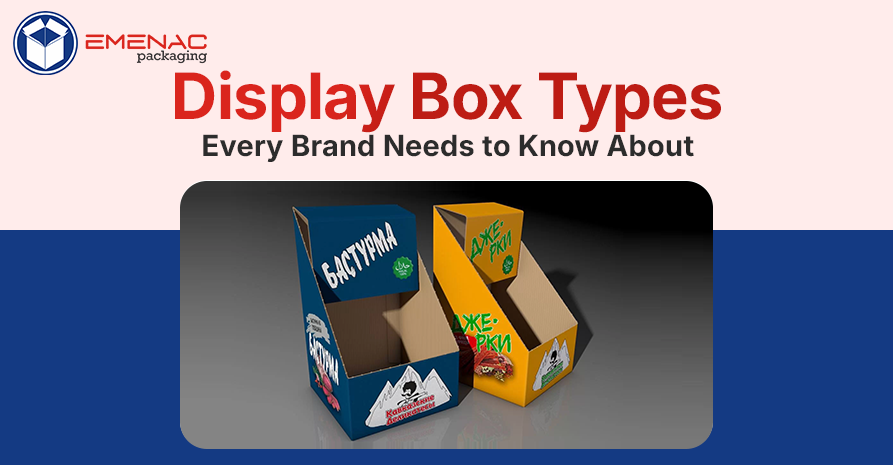
Larger, taller, more difficult to overlook. As opposed to FDUS, which consists of freestanding structures that usually house more than one unit of products, they are meant to stand on the shop floor instead of a surface.
Supermarkets, drugstores, and electronic stores often make use of them regularly. They are great when introducing a new product or during seasonal promotions due to their size and ability to be branded effectively. However, they have certain disadvantages, such as being expensive to manufacture and the need to plan flat packing.
3. Window Display Boxes
To ensure that the product sells itself, it is necessary to let the customers view it. The window box is made up of a translucent material such as acetate or polyvinyl chloride, which is incorporated into the package design.
This approach is most suitable for the sale of toys, candles, stationery, and gift foods, whereby the aesthetic appearance of the products is part of their attraction. There is a sense of building trust, as the customer feels confident viewing the product in its entirety before making a purchase decision.
4. Shelf-ready Packaging
This is one of the preferred custom printed display box types by retailers since it reduces the need for manual labour in the store. SRP is constructed in such a way that the package will be able to open and set up as the display unit straight from the outer pack.
This is an effective process that is often cheaper compared to the use of both transport and retail packaging separately. Major retail outlets nowadays insist on its adoption from the supplier’s side.
5. Magnetic Closure Gift Boxes
Just stepping a little bit away from the realm of retail display and into the world of luxurious unboxing, the use of magnetic closure boxes has become ubiquitous in the luxury market.
There is something truly satisfying about the sound of a magnetic lid closing, and it has an impact on perception. From jewellery to premium makeup lines, subscription boxes to corporate gifting kits, they all rely on them heavily.
6. Hanging Display Boxes
Featuring a hook hole or a euro slot on the top, custom hanging boxes are designed to be hung on display pegboards and hooks. This type of packaging is very effective for showcasing small items, which should be seen from all sides, yet do not require touching.
Since the buyer will see only the front view of the product package, this type of packaging is required to do a lot of talking through the image and the text.
In a Nutshell!
It needs to be acknowledged that the majority of brands end up using several of these packaging options based on what channel they’re being distributed through, what products they are, and what special events or occasions they’re tied to.
An item that goes into an upscale boutique requires different considerations than the same item sold in a mass market retailer or direct-to-consumer channel.
The benefit of recognising these differences early on, that is, before any design work or actual print runs, is that it makes your decision-making much easier.
In essence, packaging is probably the only tangible piece of marketing material that customers hold in their hands.
We at Emenac Packaging New Zealand manufacture all these display box types with a wide range of customisation options.
Share This What Makes Custom Packaging Boxes so Beneficial for your Product?
 How Window Soap Boxes are Valuable for Your Brand Success?
 Matt Vs Gloss Lamination: Which One Is Better For Packaging
 Custom Kraft Packaging Boxes: An Ultimate Guide about Types, Design, and Printing
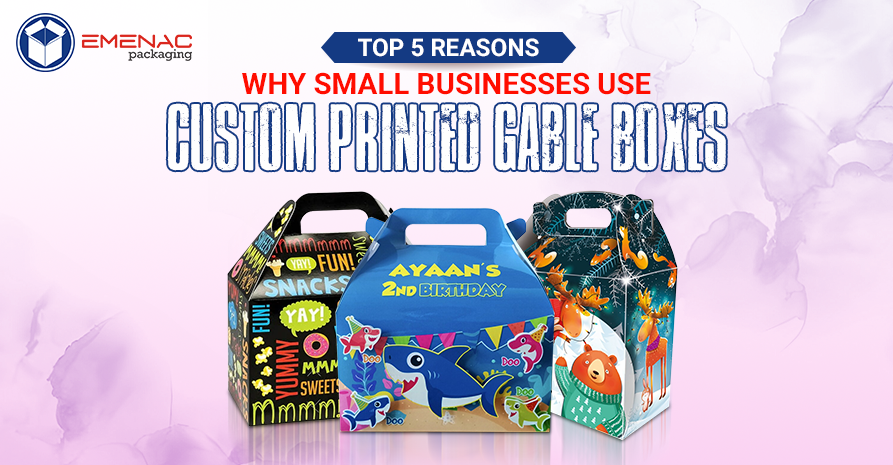 Top 5 Reasons Why Small Businesses Use Custom Printed Gable Boxes