
What Happens When Food Businesses Get Date Labelling Wrong?
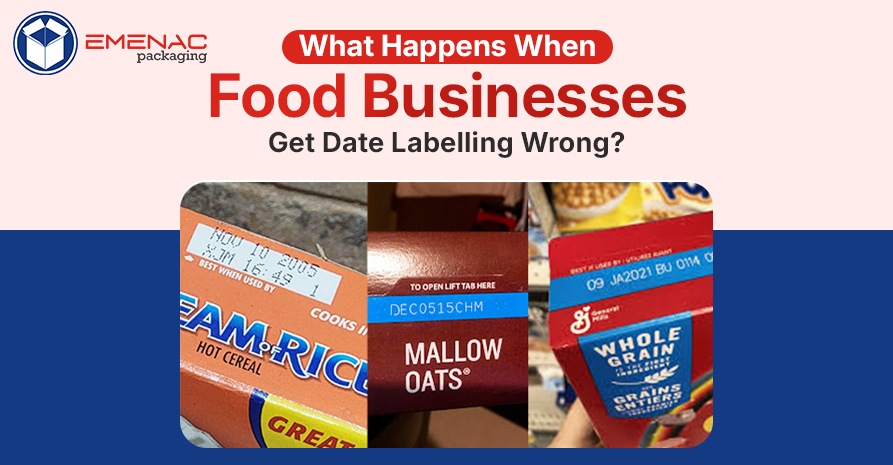
In the food industry, customer trust depends on two main things, i.e., manufacturing date and expiry date. Based on this, they imagine the freshness of packed food and finalise whether to buy or not.
From this fact, you can have an idea of how important it is for food businesses to get date labelling. But those food chains that get it wrong make costly and reputation-damaging mistakes. And the story doesn’t end here; it triggers product recalls, regulatory investigations, and in serious cases, legal action.
This blog is written to warn those businesses that don’t take it seriously.
Food Businesses Get Date Labelling Wrong
Before diving into the details of what’s happening when food businesses get it wrong. First, let’s have a look at how common it actually is. Numbers will tell you the real story.
According to Food Standards Australia New Zealand (FSANZ), there were 95 food recalls in 2024, a 16% increase compared to 2023, and above the 10-year average of 86 recalls per year.
One main cause of these food recalls due to these labelling errors was incorrect date markings. Those are the recalls that were highlighted in public through studies, as many compliance issues are dealt with quietly before they escalate that far.
Consequences of Getting Date Labelling Wrong on Food Packaging
Product Recalls
One of the painful outcomes of wrong date labelling is a product recall. When a business puts incorrect information about dates like manufacturing, best-before & use-by dates, it increases product recalls to a greater extent.
Remember, recalls are expensive and drain your profits if you don’t consider them. Beyond the direct cost of retrieving and destroying stock, businesses face logistics costs, replacement product costs, and retailer fees, etc.
The Legal and Financial Hit
Sometimes, businesses think that if they don’t follow regulations, only their operational matters get disturbed, but it can also hit legally and financially. All over New Zealand, the Ministry for Primary Industries (MPI) is responsible for enforcing food labelling standards.
And the crime doesn’t stop just with legal fines or penalties; sometimes, civil liability is also imposed. If a customer becomes ill, the legal consequences are harsh that are hard to imagine for any brand. Hence, extra care must be taken.
The Consumer Safety Risk
Date labelling blunders risk profits, brand reputation, and customers’ lives. You may have an idea that use-by dates are written for genuine food safety reasons. And incorrect dates can put customers’ health at risk.
A 2025 national survey by the Harvard Law School Food Law and Policy Clinic, ReFED, and Johns Hopkins Bloomberg School of Public Health found that 43% of consumers always or usually discard food near or past the date on the label. Incorrect dates create a lot of mess, so be sure to avoid them.
The Reputational Damage
Reputation in any business is hard-earned, so it shouldn’t be wasted in any way. Product recalls damage a brand’s reputation, and the nightmare is that FSANZ publishes every recall on its website, and media outlets pick up significant ones.
Once your brand name is entered in the list of FSANZ, especially due to a product recall, that thing is highlighted for longer, even after the issue is resolved. So, it is recommended to save your brand reputation at all costs.
Why Does This Keep Happening?
According to the 2020-2024 data of FSANZ recall, the most common corrective actions taken after recalls were:
- Staff training (18%)
- Amended handling procedures (14%)
- Altering product labels (13%)
This data clearly shows that most errors come from human inefficiencies or a lack of proper training. But why do human inefficiencies occur?
Maybe due to a lack of staff training, incorrect date coding equipment, or products being packed in the wrong packaging.
What Should You Do as a Food Business Owner?
If you are a food manufacturer, processor, or even distributor, you should keep in mind these things.
- Know the difference between each date type and what each date means? If you apply the wrong one in the wrong format, the consequences are in front of you.
- Verify dates at every stage, for example, before, during, and after production runs. Go for digital automated verification systems.
- Document everything timely manner. If something goes wrong, keep track of what & why it happens. Respond quickly without waiting for any other mistake.
- Team training is a must. Train them on how to correctly label dates on packaging without making mistakes.
- When anything changes, review your labels before packaging goes to final production.
Last Words!
Food businesses get date labelling wrong, which may not be the biggest flaw for your brand until you face reputational, financial, and legal consequences.
Unfortunately, in New Zealand’s food packaging market, labelling recalls are rising year on year, and regulatory scrutiny is increasing. Just because of that, do not risk your brand.
For any type of custom printed food packaging boxes, you can feel free to reach out to us at Emenac Packaging New Zealand. We are just one message or call away.
Share This What Makes Custom Packaging Boxes so Beneficial for your Product?
 How Window Soap Boxes are Valuable for Your Brand Success?
 Matt Vs Gloss Lamination: Which One Is Better For Packaging
 Custom Kraft Packaging Boxes: An Ultimate Guide about Types, Design, and Printing
 Top 5 Reasons Why Small Businesses Use Custom Printed Gable Boxes