
Zero-Waste Packaging: The Materials That Will Dominate 2025–2030
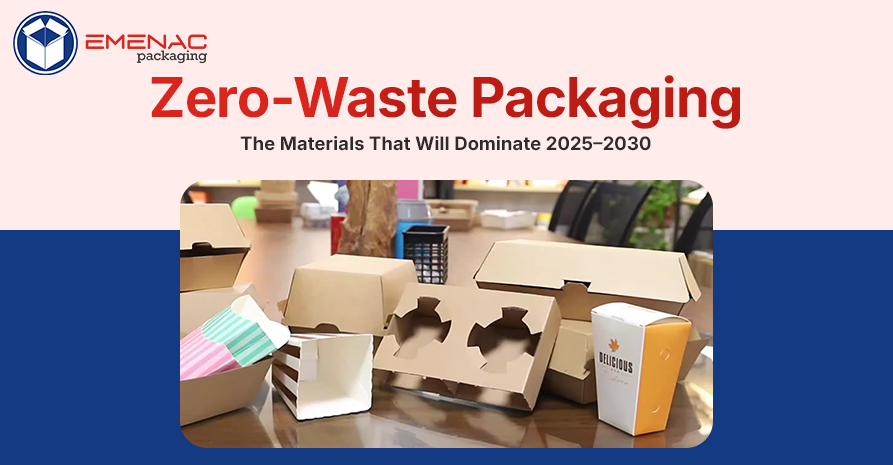
Global packaging trends are changing day by day. Regulatory authorities are tightening environmental regulations to promote zero-waste packaging. This is because customers demand greener choices, and sustainability competition is at its peak.
The period from 2025–2030 is set to become a deciding era for sustainable packaging. Brands that start adapting now will be far better at competing in the market. This blog post covers sustainable materials that will dominate the coming 5 years. Keep reading!
What is Zero-Waste Packaging?
Zero-waste packaging is more than just using eco-friendly packaging materials. It is associated with eliminating waste at every stage and using resources efficiently or effectively.
This system prioritises reuse over single-use, refillability over constant replacement, and natural biodegradability or regeneration. The reason why it’s a little bit different from eco-friendly packaging is that it is designed for a fully circular economy.
Materials That Will Lead the Zero-Waste Movement
1. Plant-Based Biopolymers (PLA, PHA)
In sustainable packaging, plant-based polymers earned their name as a strong contender. Polylactic Acid (PLA) and Polyhydroxyalkanoates (PHA), both materials created from renewable resources.
Why do we add them on top of the list? Because they are industry compostable, strong, lightweight, and have lower carbon footprints. Two challenges are associated with this material type:
- Limited access to industrial composting facilities.
- Higher cost compared to traditional plastics.
2. Mushroom Packaging (Mycelium)
Mushroom or Mycelium packaging is already being used by luxury, cosmetic, and electronic brands. Apart from greener packaging, this material is most commonly used to protect products from any damage.
Mushrooms are highly biodegradable and have a zero-carbon footprint. Additionally, you don’t need much energy to produce them, and they can be easily customised to any shape or structure.
However, there are two challenges associated with this type of packaging. These are:
- Scale
- Speed of production
However, with time, these challenges may subside.
3. Seaweed & Algae-Based Packaging
With time, seaweed packaging is widely used for food and personal care items’ packaging. Its potential to replace plastic films and its agility make it a perfect material for eco-friendly packaging.
This material is naturally abundant, renewable, and edible due to minimal farming resources and an easy formulation procedure. As startups are scaling, seaweed and algae-based packaging will be replaced with plastic wraps.
4. Recycled Paper & Cardboard
Custom printed paper and cardboard packaging solutions reduce carbon footprint and manufacturing with minimal waste. Due to the advancement in fibre engineering and water-based coatings, paper packaging is replacing plastic in many industries.
Additionally, due to its cost-efficiency and wide use, recycled paper and cardboard will steadily dominate e-commerce, food service, and FMCG packaging. Cardboard, simple kraft, and paper are cost-effective packaging materials.
5. Moulded Pulp
Moulded pulp is a shock-absorbing and sustainable packaging solution that is less in used now, but in the future, you will see how it is massively used. It is produced from recycled paper or cardboard fibre.
Pulp can be easily moulded into different shapes or structures, making it a versatile option for various products. Due to its strength and shock-absorption characteristics, moulded pulp is a long-term choice for brands.
The Future of Zero-Waste Packaging
Between 2025 & 2030, there could be unlimited changes related to zero-waste packaging that we all expect to see in these five years. These 5 materials will surely dominate from 2025 to 2030.
Let’s see which changes would have been expected to be made in these 5 years. At Emenac Packaging New Zealand, we proudly say that none of our packaging material contains any type of plastic, and all the materials we manufacture are easy to reuse, recycle, or biodegrade.
Share This What Makes Custom Packaging Boxes so Beneficial for your Product?
 How Window Soap Boxes are Valuable for Your Brand Success?
 Matt Vs Gloss Lamination: Which One Is Better For Packaging
 Custom Kraft Packaging Boxes: An Ultimate Guide about Types, Design, and Printing
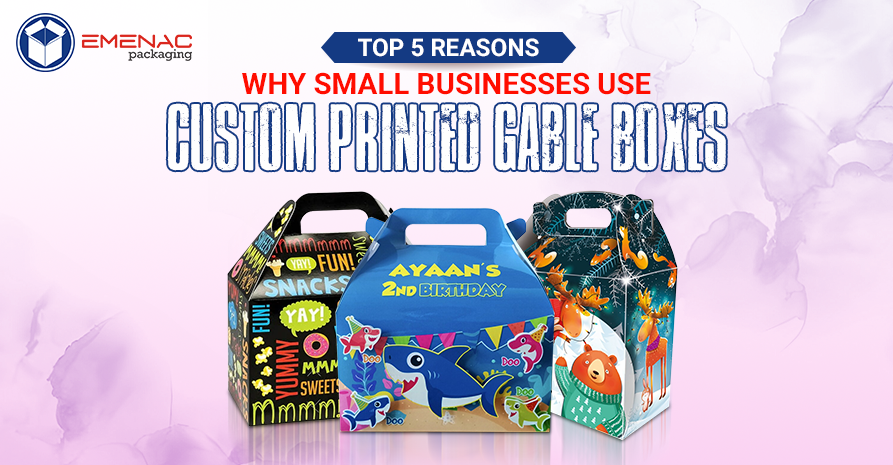 Top 5 Reasons Why Small Businesses Use Custom Printed Gable Boxes